

Introduction
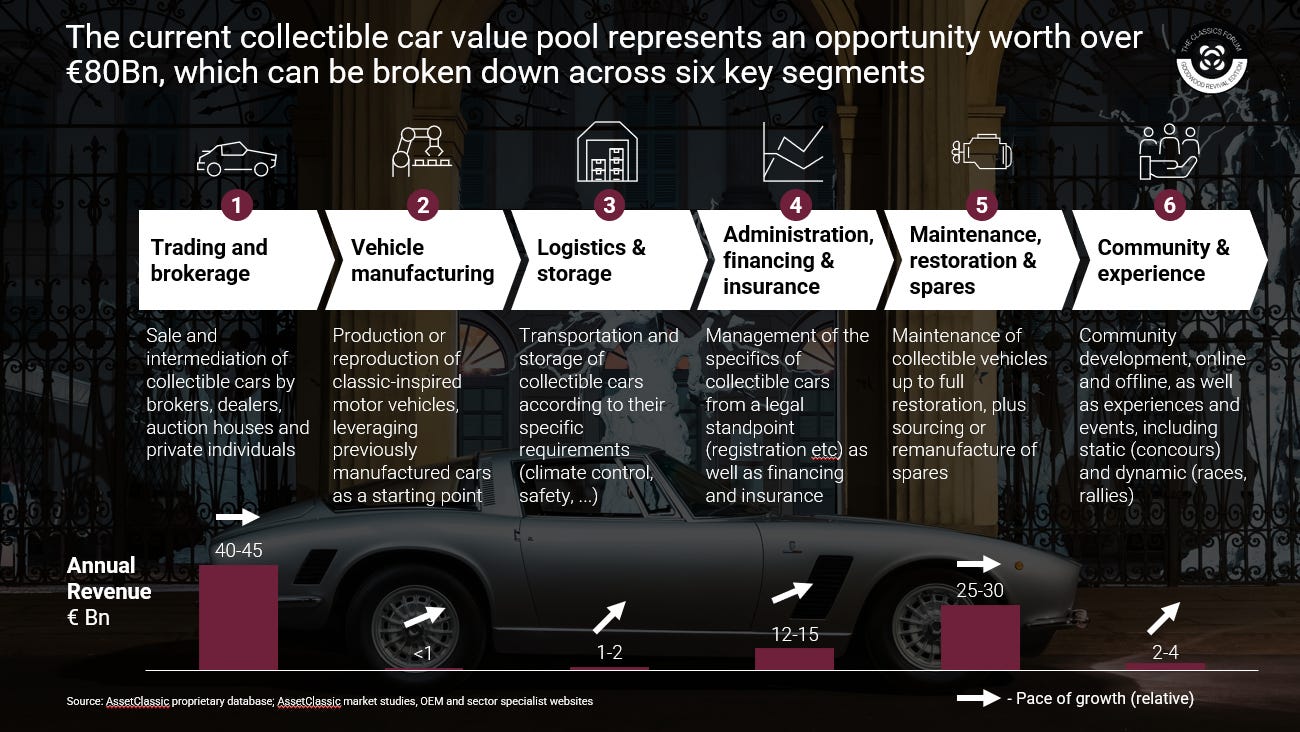
In Part 1: From Passion to Asset Class – Framing the Collectible Car Sector, we established the scale and structure of the €800 billion collectible car ecosystem and introduced its six core value-chain pillars.
In Part 2: The Marketplace of Passion – Inside Classic Car Trading & Brokerage, we examined the €40–45 billion trading engine that drives liquidity, price discovery, and market transparency.
This third article turns to a smaller but strategically critical segment: Logistics & Storage.
With an estimated €1–2 billion in annual revenue, logistics and storage may represent a fraction of the overall value chain – yet they underpin the most critical areas of ownership experience and asset preservation. Without specialized transport, climate-controlled facilities, and institutional-grade security, the collectible car market would not function at scale, and without the ongoing developments in storage it’s hard to see how collectible car enjoyment can be sustained into a healthy future.
The perspectives presented here are grounded in AssetClassic’s research and discussions at The Classics Forum 2025, held at Goodwood House during the Goodwood Revival – a convening of industry leaders focused on the future of the collectible car sector (www.theclassicsforum.com)
As in the broader series, we are intentionally deferring discussion of Vehicle Manufacturing (second step in our value chain). That segment will be addressed later in the context of OEM participation across the full value chain.
Market Size and Structure
Logistics and storage generate approximately €1.0–1.5 billion in storage revenue and €0.3–0.5 billion in transport revenue, for a combined annual market of €1–2 billion. It’s important to note that our analysis is focused on specifically on storage and transport of collectible cars, and as such, is a conservative estimation compared to these services in broader luxury automotive world and to additional ‘concierge’ services (most of which are captured in other parts of the value chain).
Although smaller than trading, the segment performs three essential functions:
Enabling liquidity – facilitating cross-border sales and event participation.
Protecting value – preserving condition and provenance.
Supporting experience – increasingly serving as physical hubs for collectors.
The competitive landscape spans:
Specialized automotive transport providers
Global logistics companies with vehicle divisions
Dedicated luxury storage operators
Public and semi-public garage operators
The market remains fragmented and regional, with limited standardization across jurisdictions.
Transport: Infrastructure for Global Liquidity
The globalization of the collectible car market has fundamentally reshaped logistics demand and increased transport complexity.
Several forces are converging:
Online auctions and digital platforms, which have expanded buyer pools globally.
Expanding pools of vehicles that meet import eligibility for 25+ year-old vehicles, particularly into the U.S., which has accelerated cross-border trade.
Global concourse, rallies, and motorsport events, where owners are willing to ship cars internationally for participation.
Geographic relocation of collectors, especially across Europe, North America, and the Middle East.
Unlike standard automotive logistics, collectible car transport must account for:
Enclosed, climate-controlled trailers.
Specialized loading systems.
Real-time tracking and monitoring.
Insurance policies tailored to high-value assets.
Customs and regulatory expertise.
In effect, the transport layer becomes a financial safeguard. As a mishandled shipment can erase millions in value, for high-value vehicles, transport risk is financial risk.
As liquidity increases, so too does the importance of standardized, trusted, and transparent logistics frameworks.
Storage: From Warehouse to Asset Custody
Rising asset values, expanding collection sizes and increasing ongoing servicing needs of newer collectible cars have fundamentally shifted expectations around storage.
Historically, collectors stored cars in private garages, industrial facilities, or discreet warehouses. More recently, collectors and insurers are starting to insist on vault-like facilities with:
Advanced climate and humidity control.
Fire suppression systems.
24/7 surveillance and remote monitoring.
Strict access control and documentation.
This shift reflects a structural change where collectible cars are increasingly treated as financial assets.
The live poll conducted during The Classics Forum 2025 underscores this priority shift. When asked which features matter most in a storage facility, respondents overwhelmingly prioritized:
Security and remote monitoring (80%)
Humidity control (37%)
Battery care and start cycles (35%)
Regular engine start-up (24%)
Concierge and logistics support (24%).
The message is clear: storage is no longer passive. It is active asset management.
Storage-as-a-Hub: Convergence of Custody and Community
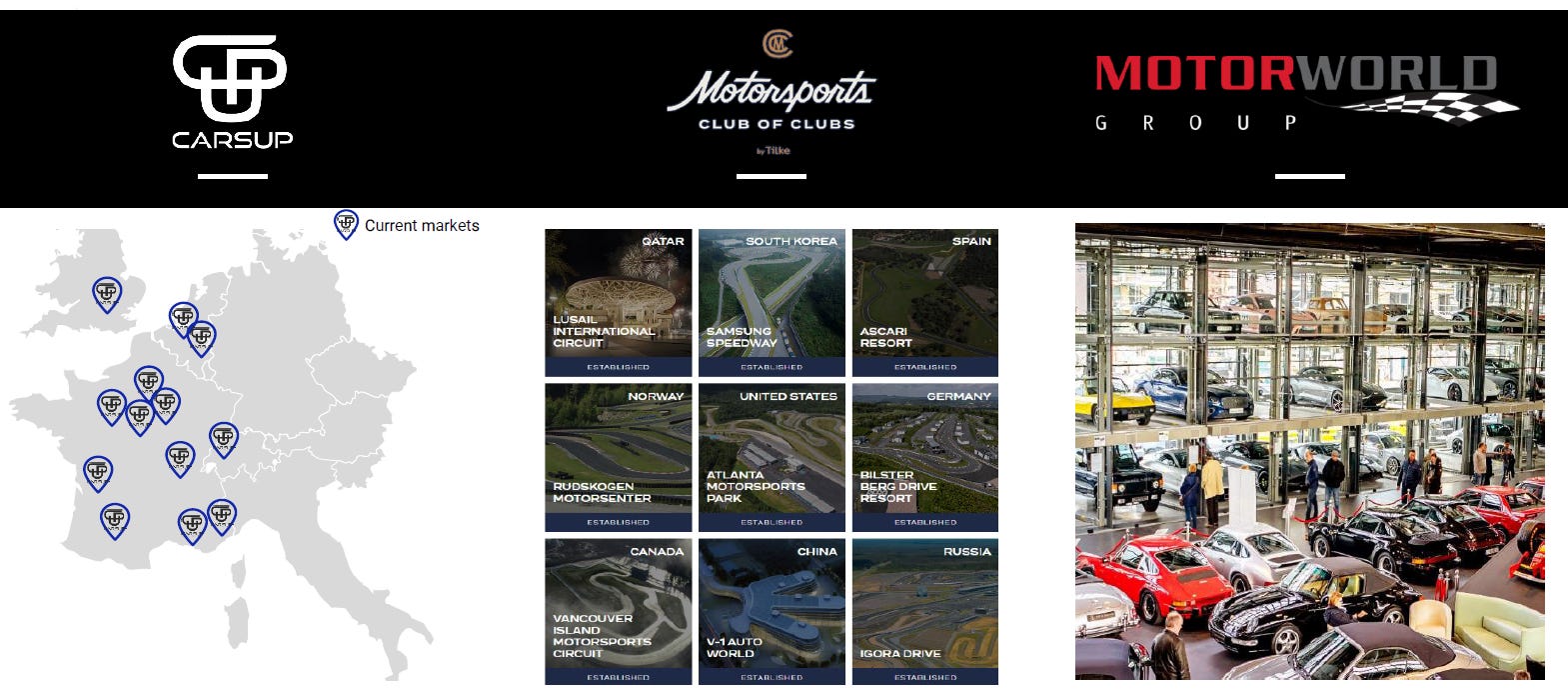
A notable structural development is the emergence of the “Storage-as-a-Hub” model.
High-end operators are transforming storage facilities into integrated ecosystems combining:
Climate-controlled custody
Flexible event spaces
Food & beverage offerings
Private members’ clubs
Automotive services (detailing, upkeep, delivery)
In some cases, these facilities are directly connected to racetracks or experiential automotive destinations.
This model reflects a broader trend across the value chain: asset infrastructure is increasingly bundled with lifestyle infrastructure.
Storage shifts from a cost center to a social venue, networking platform, content creation environment and a gateway into a rich community. In this sense, logistics and storage begin to overlap with the “Community & Experience” pillar of the value chain. The garage becomes both vault and clubhouse.
Outlook: Infrastructure as Strategic Advantage
Logistics and storage may not generate the largest revenue pool in the value chain, but they form the backbone of its operational integrity.
As the collectible car market grows more international and institutional, infrastructure quality will increasingly influence market liquidity, insurance premiums and collector confidence. Meanwhile, high-end facilities will continue evolving into platforms blending custody, community, and lifestyle.
The value-chain schematic introduced in Part 1 once again serves as our roadmap. After exploring trading and brokerage and now logistics and storage, we see how each pillar reinforces the others.
Next in the series, we will move to Administration, Financing & Insurance, examining how legal frameworks, structured finance, and risk management further professionalize the asset class.
This article is part of an AssetClassic thought-leadership series based on insights developed for The Classics Forum 2025, held at Goodwood House during the Goodwood Revival. The series explores each segment of the collectible-car value chain: from trading and brokerage to restoration, manufacturing, and heritage programs, through the lens of data, market structure, and cultural evolution.