

When it comes to naming four iconic supercars from the early 2000s, the answer is almost unanimous: Ferrari Enzo, Porsche Carrera GT, Ford GT, and of course, the Mercedes-Benz SLR McLaren. But what do these legendary cars have in common?
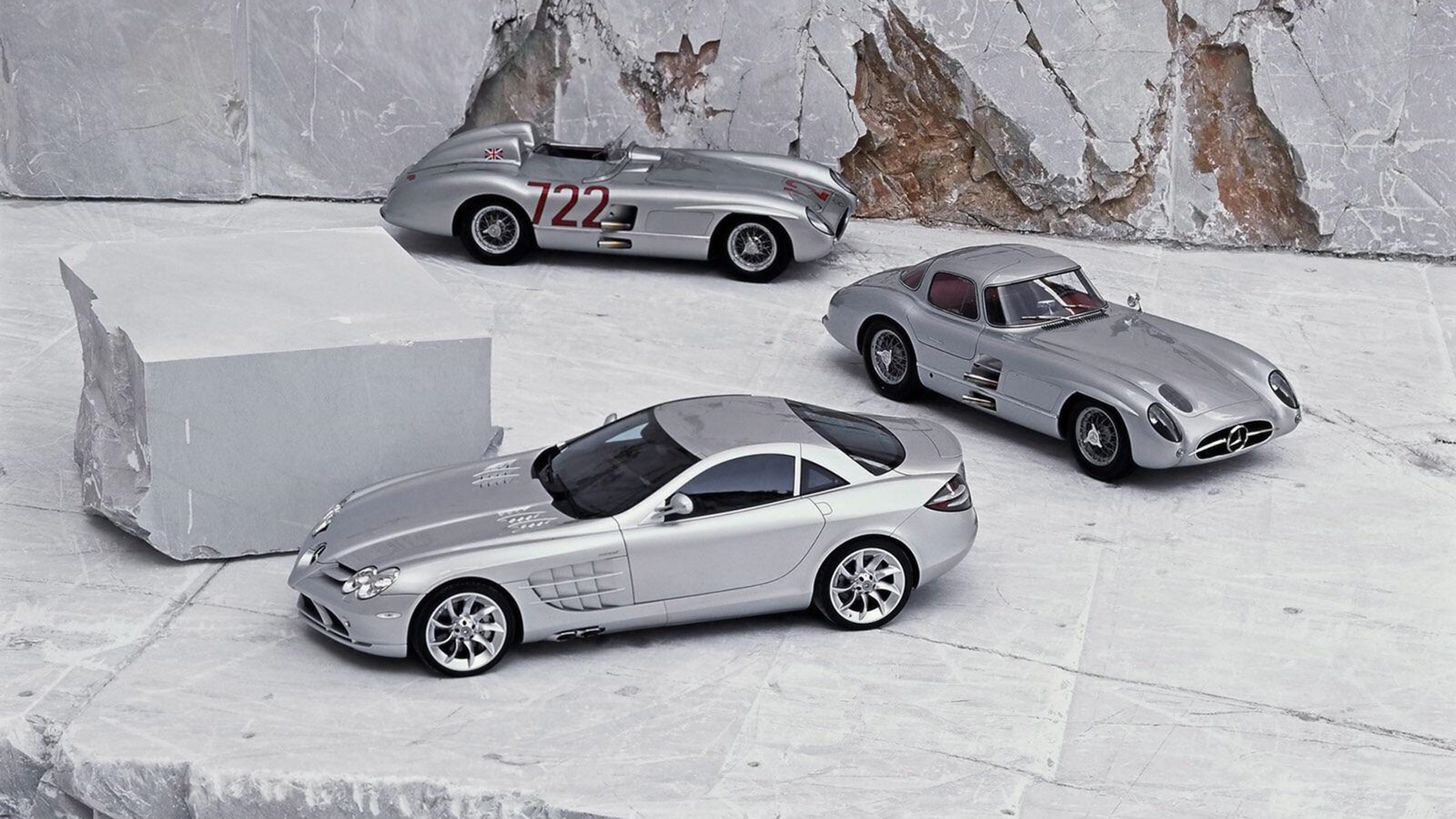
Let’s begin with their names. Each one is a tribute to the past, evoking legends in automotive history. These aren’t ordinary cars - they’re icons destined to leave a lasting mark. We all know who Enzo Ferrari was. Porsche chose to christen its most extreme supercar with the most renowned name in its arsenal: Carrera, sided by the GT acronym. We needn’t spend much time explaining the legacy of the GT40. And then there’s the SLR McLaren, merging two storied names: SLR, coming from the 300SLR, the car that dominated racing and remains the most valuable ever sold (over $140 million), and McLaren, Mercedes’ F1 partner for almost 20 years, a partnership that led to the team’s dominance of Formula 1 in the late ’90s.
As true hypercars, each of these machines incorporates F1-derived components and techniques (with the exception of the more conventional Ford GT), making them technological masterpieces.
Despite its incredible pedigree and advanced engineering, the Mercedes-Benz SLR McLaren remains perhaps the most overlooked supercar of the past two decades. It may not be a track-focused machine, it might carry a bit more weight than its rivals, and it doesn’t have a rear-mounted engine, but the chances of seeing another Mercedes designed by Gordon Murray and wearing a McLaren badge above its side-exit exhausts are slim - likely nonexistent.
Speaking of Gordon Murray, it’s worth noting that the SLR is the only McLaren-built road car shaped by his genius, aside from the iconic $20M+ McLaren F1.
When new, the SLR McLaren carried a price tag of around $450,000 - steep, but on par with its rivals (except the Ford GT). Just over 2,000 units were produced by McLaren over six years, including the various limited editions, making it a relatively rare breed. Yet among its peers, it’s the only one still trading below its original MSRP (for standard coupes and roadsters in average condition) vs multiple of MSRP. We strongly believe that this car is undervalued, and the market is slowly starting to recognize its true worth.
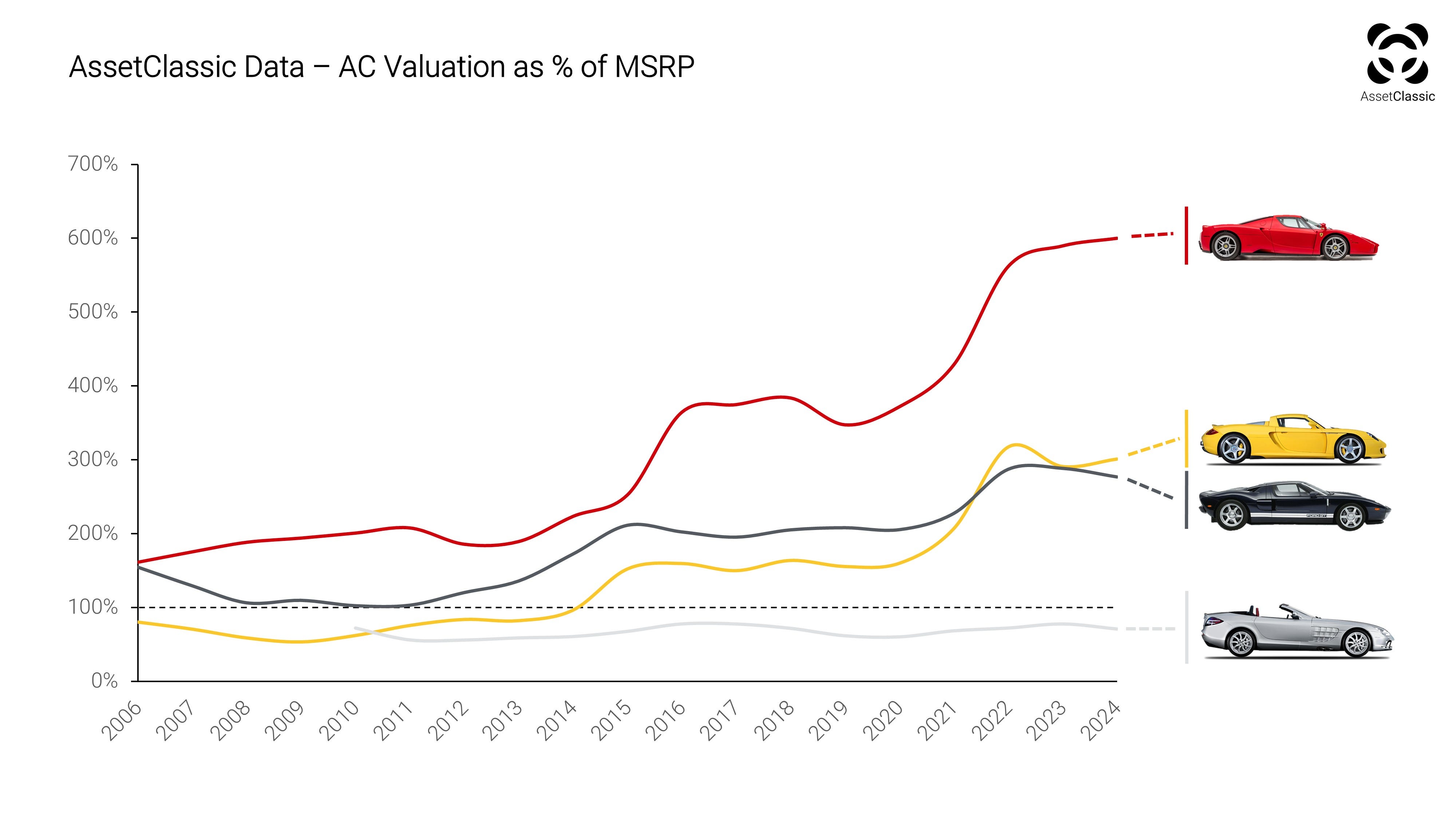
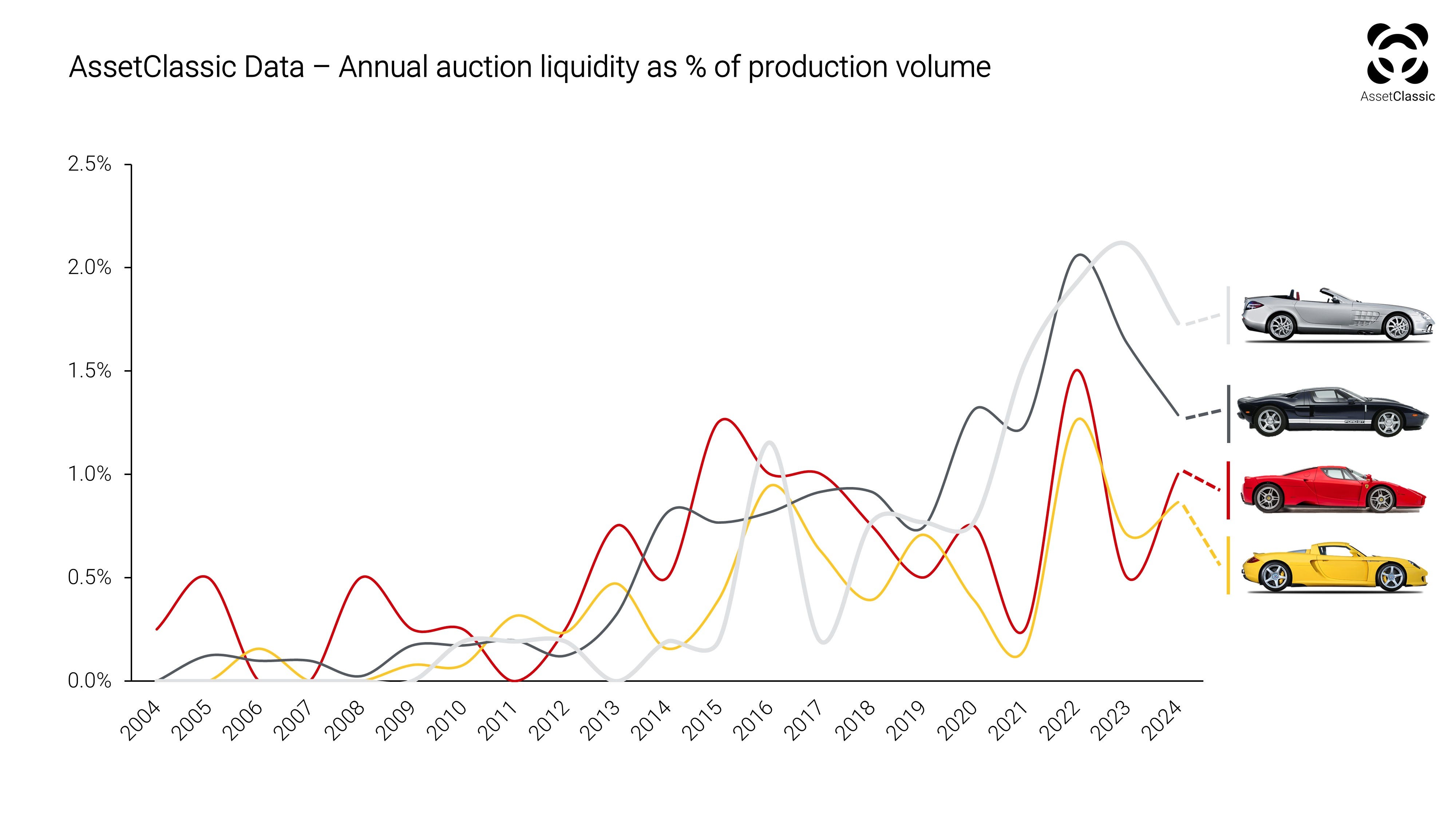
We’ve seen increased market activity lately, and as noted by Hagerty, millennials now represent the fastest-growing demographic of SLR owners. In fact, over the last few years it has been driving significantly more sales compared to its competitors. And if you consider the superior reliability and usability of SLR's engines, even without factoring in the recent Carrera GT recall that has slowed its market, the reasons become even clearer.
The SLR, particularly in its rarer roadster form, represents excess in all the best ways. Its unique design, features, and purpose resonate strongly with younger generations. Unlike other hypercars of the same era, it wasn’t designed to be purely extreme. It’s a performance-oriented vehicle, but one where, according to Mercedes, you can comfortably carry on a conversation with the top down while cruising at over 200 km/h.
In recent years, the market’s opinion of the SLR has been polarised - either you love it or you don’t. We proudly belong to the former camp, and supported by data, we firmly believe that this car holds significant appreciation potential in the coming years. And unlike others, there’s an SLR for every taste: you can choose from several versions - trading at higher prices than the standard one - the 722, the Stirling Moss, or the ‘Crown Edition’, commissioned by Bahrain's Royal family.
Note: SLR McLaren Roadster has been considered for graph calculations.